" We Are Dealing Only In Bulk Quantity "

Call us
08037735111
Call us
08037735111
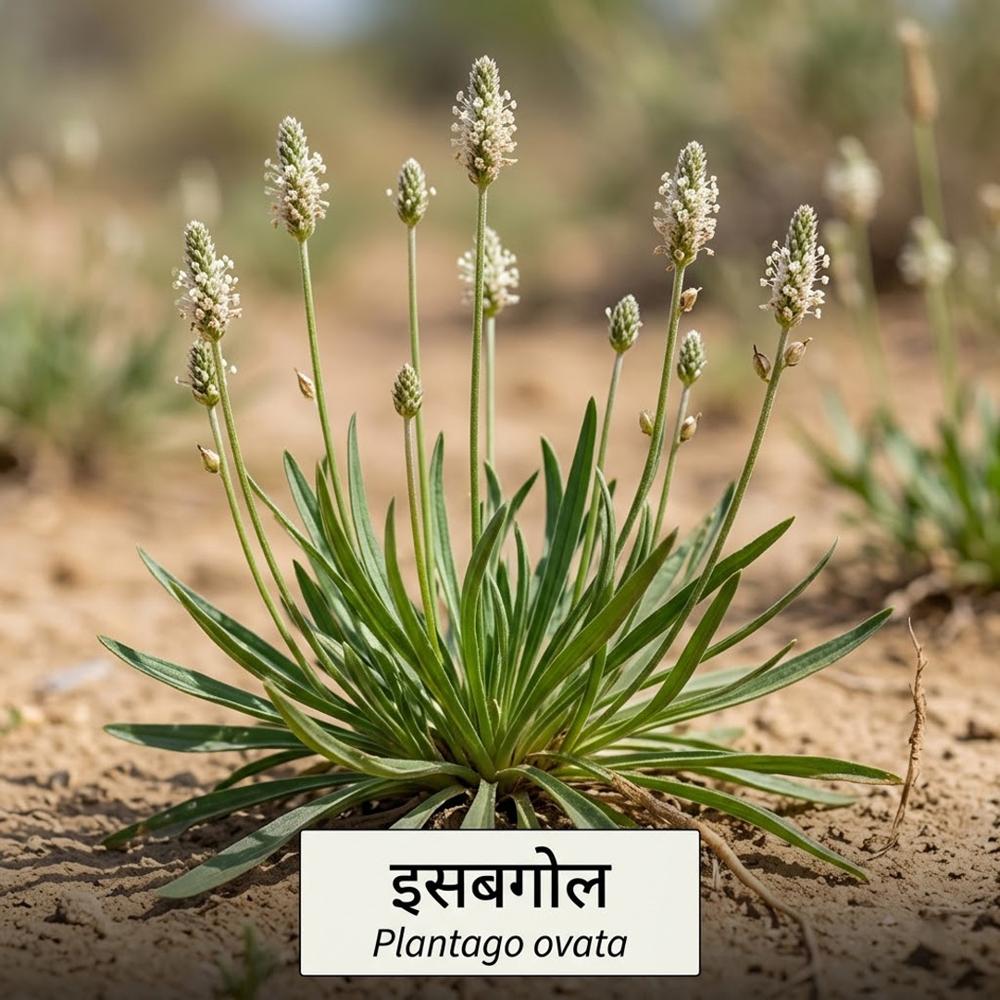
Plantago ovata, commonly known as Isabgol, Ispaghula, or Psyllium, is a traditionally valued herb belonging to the Plantaginaceae family. It is widely cultivated and processed as a botanical and dietary-fiber raw material for use in Ayurvedic formulations, herbal products, nutraceuticals, dietary supplements, functional foods, digestive wellness products, and fiber-enriched formulations.
We offer quality Plantago ovata suitable for B2B buyers, Ayurvedic manufacturers, herbal product manufacturers, nutraceutical companies, food manufacturers, dietary supplement companies, wholesalers, exporters, and private-label businesses. The raw material can be supplied in different forms and specifications according to buyer requirements.
Plantago ovata, commonly known as Isabgol or Psyllium, is a small annual herb cultivated extensively in India and other suitable regions. The seeds and seed husk are the principal commercially utilized parts. Psyllium husk is particularly valued for its high content of soluble dietary fiber, which absorbs water and forms a gel-like mass.
Mature Plantago ovata plants are harvested and carefully dried. The seeds are separated from the plant material and cleaned to remove dust and foreign matter. The outer husk is then mechanically separated from the seeds and processed according to the intended application. The material may be supplied as whole seeds, psyllium husk, husk powder, or processed fiber ingredient, according to buyer requirements.
Plantago ovata is widely utilized in dietary supplements, nutraceutical products, Ayurvedic formulations, herbal products, functional foods, fiber supplements, digestive wellness products, and food formulations. Psyllium is traditionally valued for supporting bowel regularity, digestive health, and dietary-fiber intake.
Its excellent water-absorbing and gel-forming properties also make it useful as a functional fiber and texture-supporting ingredient in selected food formulations.
A: Isabgol is available in forms such as whole seeds, psyllium husk, husk powder, capsules, sachets, and fiber-based dietary formulations. Psyllium products should generally be taken with sufficient water and according to the manufacturer's directions.
A: Psyllium is primarily valued as a source of soluble dietary fiber and is traditionally used to support bowel regularity and digestive wellness. Its ability to absorb water and form a gel contributes to its functional fiber properties.
A: The seeds and seed husk are the principal commercially utilized parts. The husk is the outer coating of the seed and is particularly valued for its high soluble-fiber content.
A: Plantago ovata is generally harvested once the plants have reached maturity and the seed capsules have developed adequately. The exact harvesting period varies according to cultivation region, climate, variety, and agricultural practices.
A: Yes. Plantago ovata is widely used as a dietary-fiber ingredient in Ayurvedic products, herbal formulations, nutraceuticals, dietary supplements, functional foods, digestive wellness products, and fiber-enriched food formulations, subject to applicable quality, safety, and regulatory requirements.
A: Store Isabgol seeds and husk in a cool, dry, and well-ventilated place, protected from direct sunlight, excessive heat, and moisture. Keep the material in clean, tightly sealed, food-grade packaging to help maintain its fiber quality, purity, and shelf life.

Price:

 Send Inquiry